Tavares Strachan’s ‘There Is Light Somewhere’ Illuminates the Past and Envisions Hope for the Future
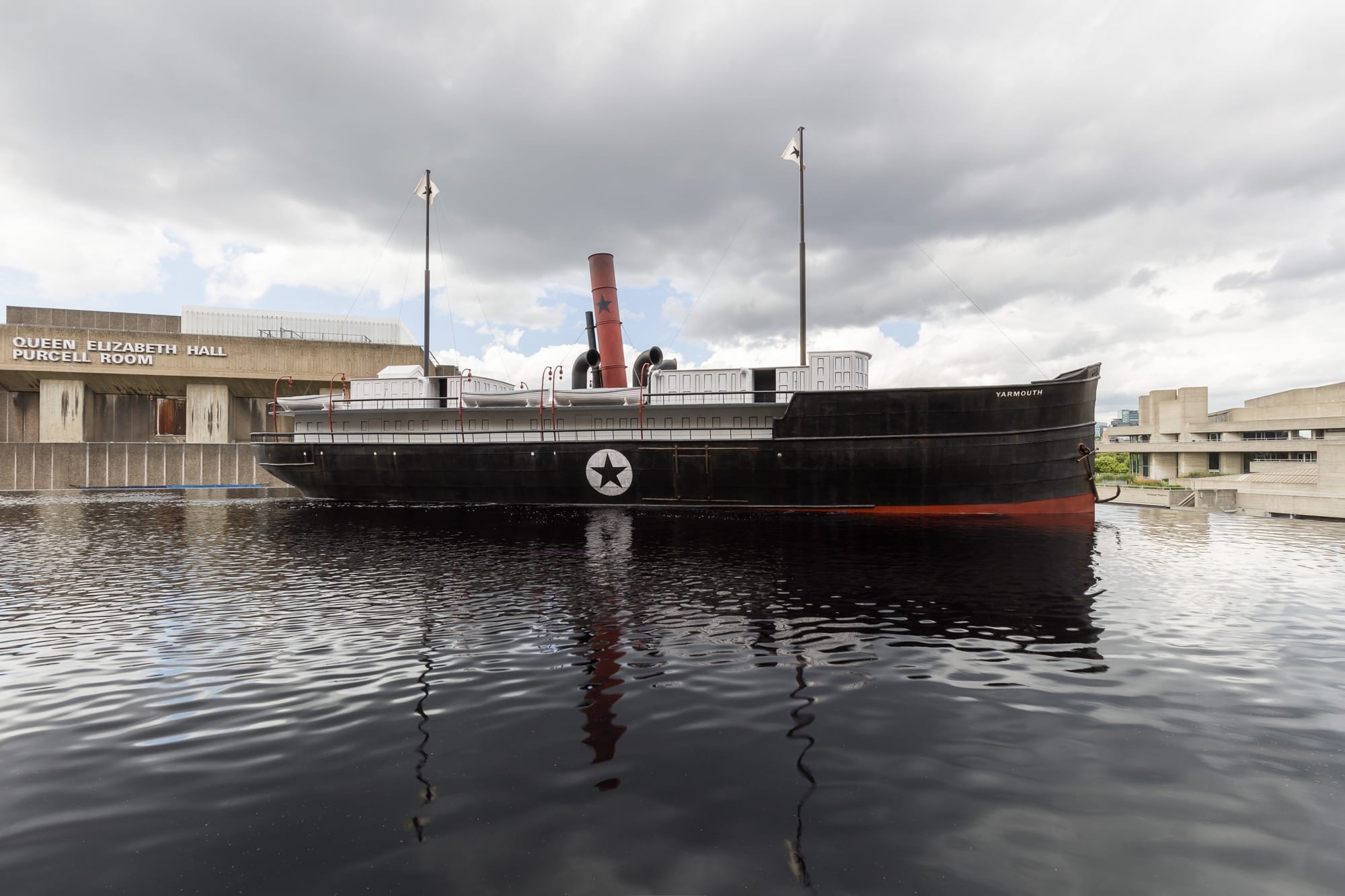
From the 14-meter-long “Black Star,” a ship docked in an elevated pool, to a series of immersive, luminescent installations, Tavares Strachan highlights hidden histories at the Hayward Gallery at London’s Southbank Centre. The artist’s large-scale survey, There Is Light Somewhere, explores his continuing interest in history and its intersections with science, exploration, and culture.
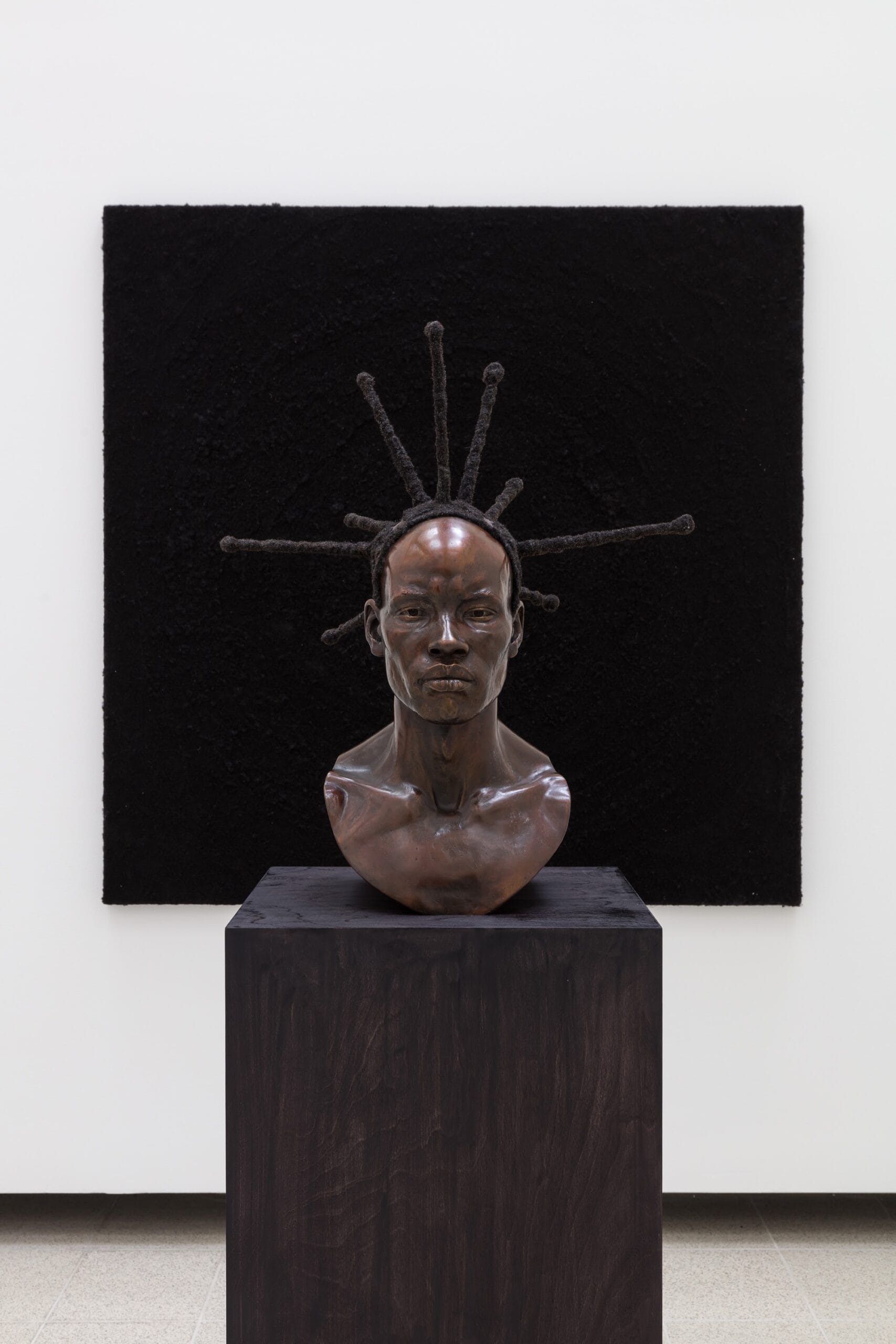
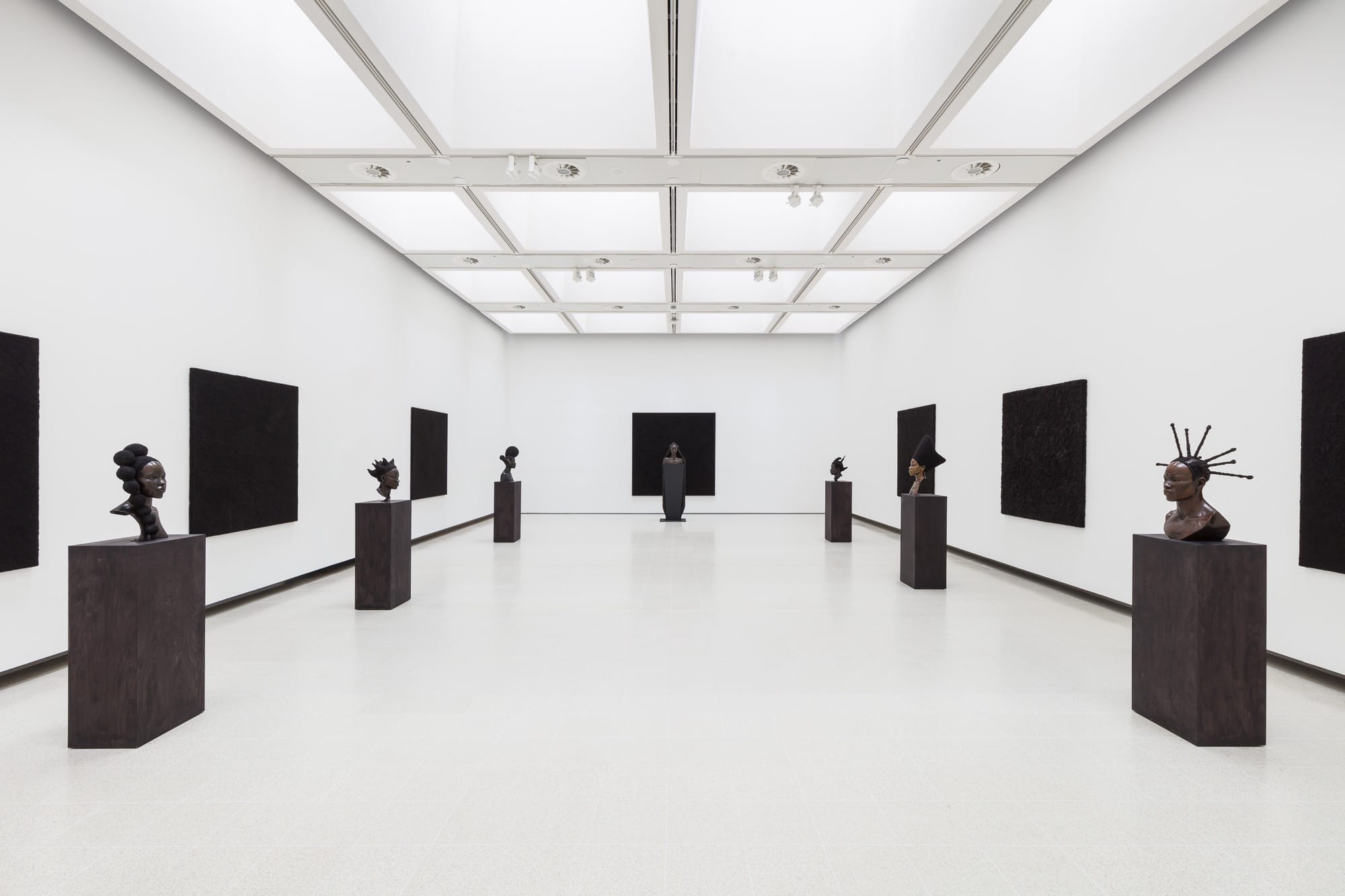
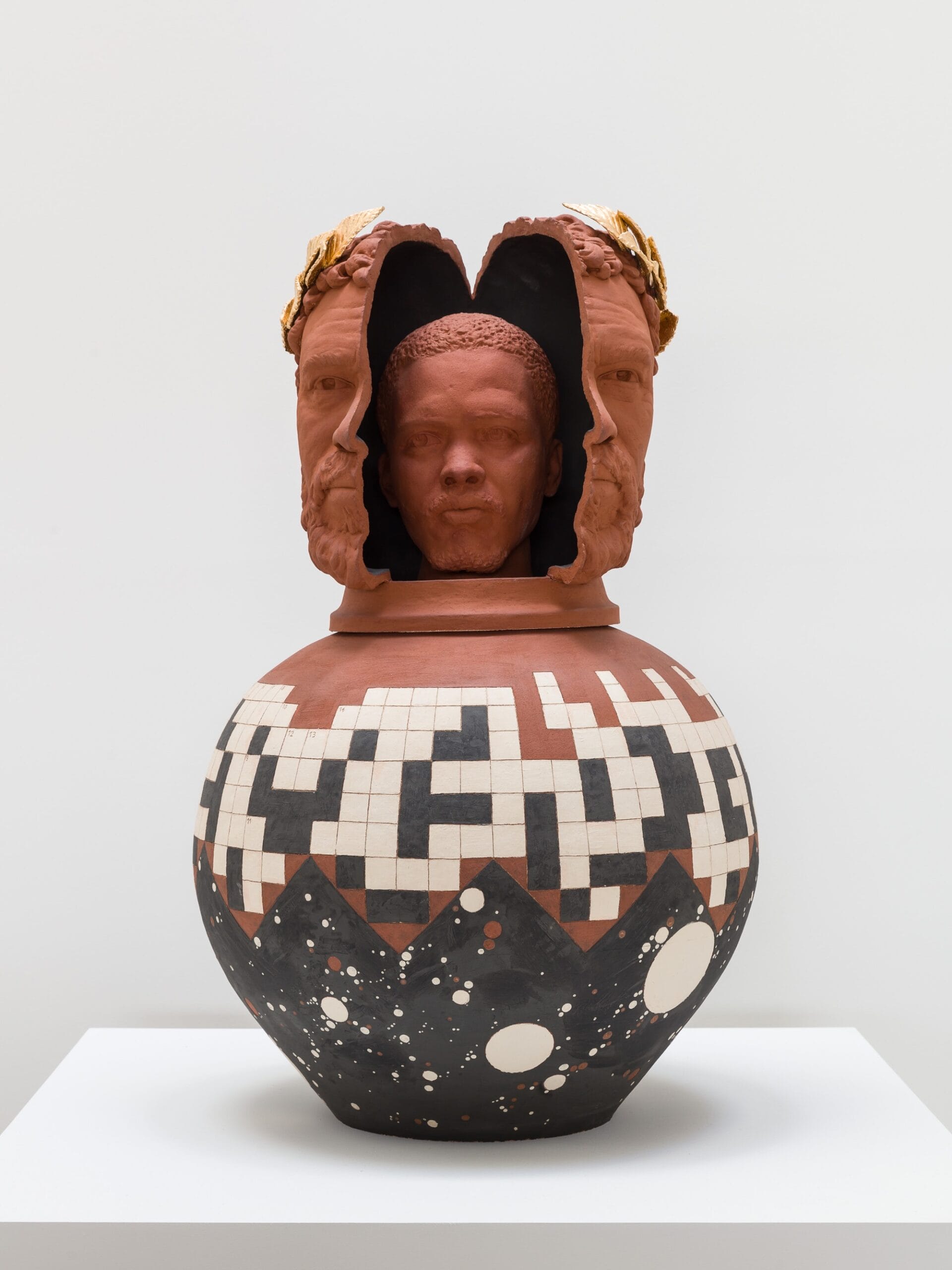
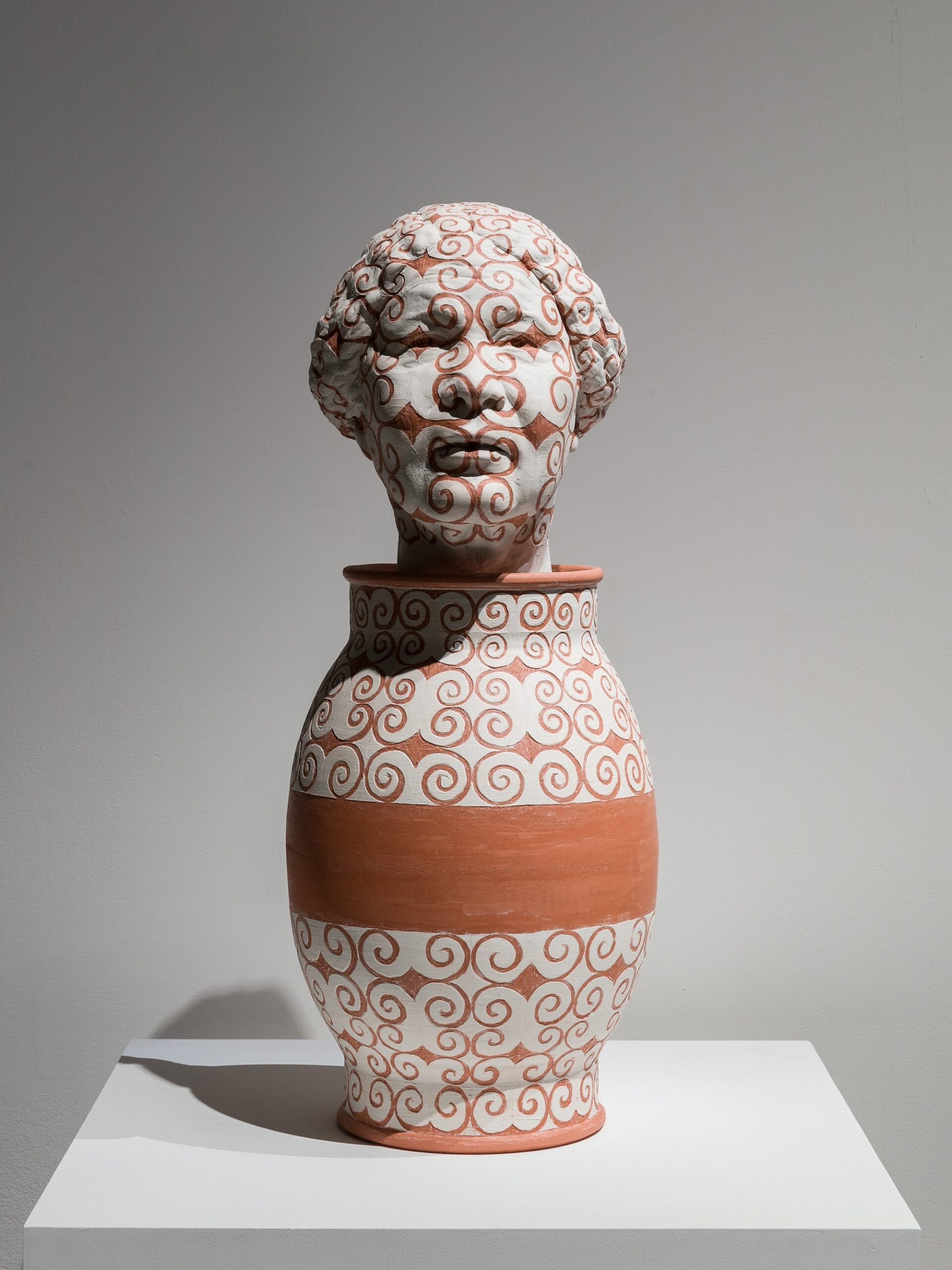
Strachan (previously) often taps into the legacy of the portrait bust, drawing on sources ranging from ancient Egypt and Rome to early-modern examples that have typically celebrated wealthy, white European men. The artist turns this custom on its head by highlighting Black figures who have been historically ignored or intentionally overlooked, delving into what it means to be recognized or belong in the world. The theme of light often appears in his work through the use of neon or the contrast of brightness and shadow.
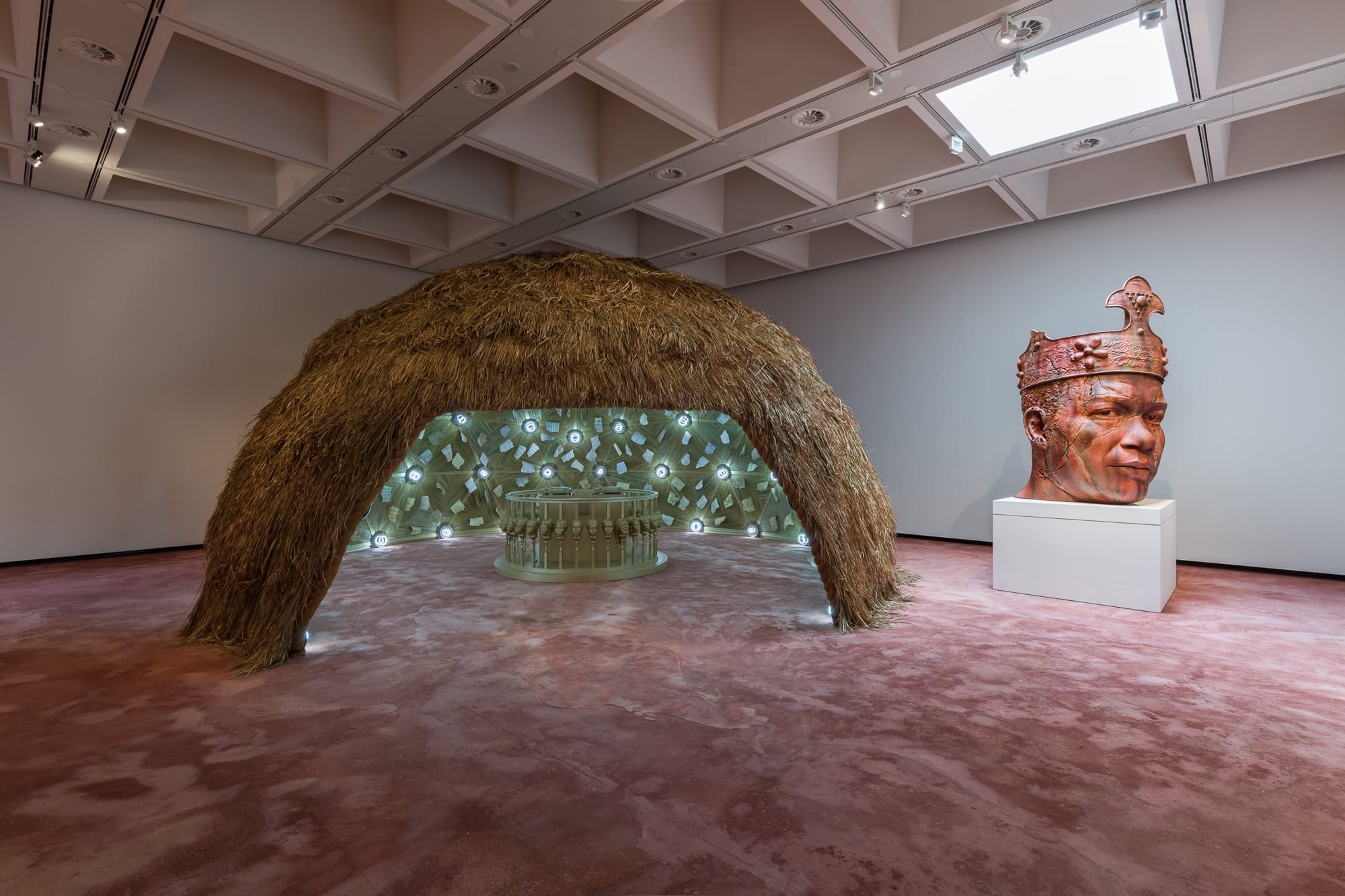
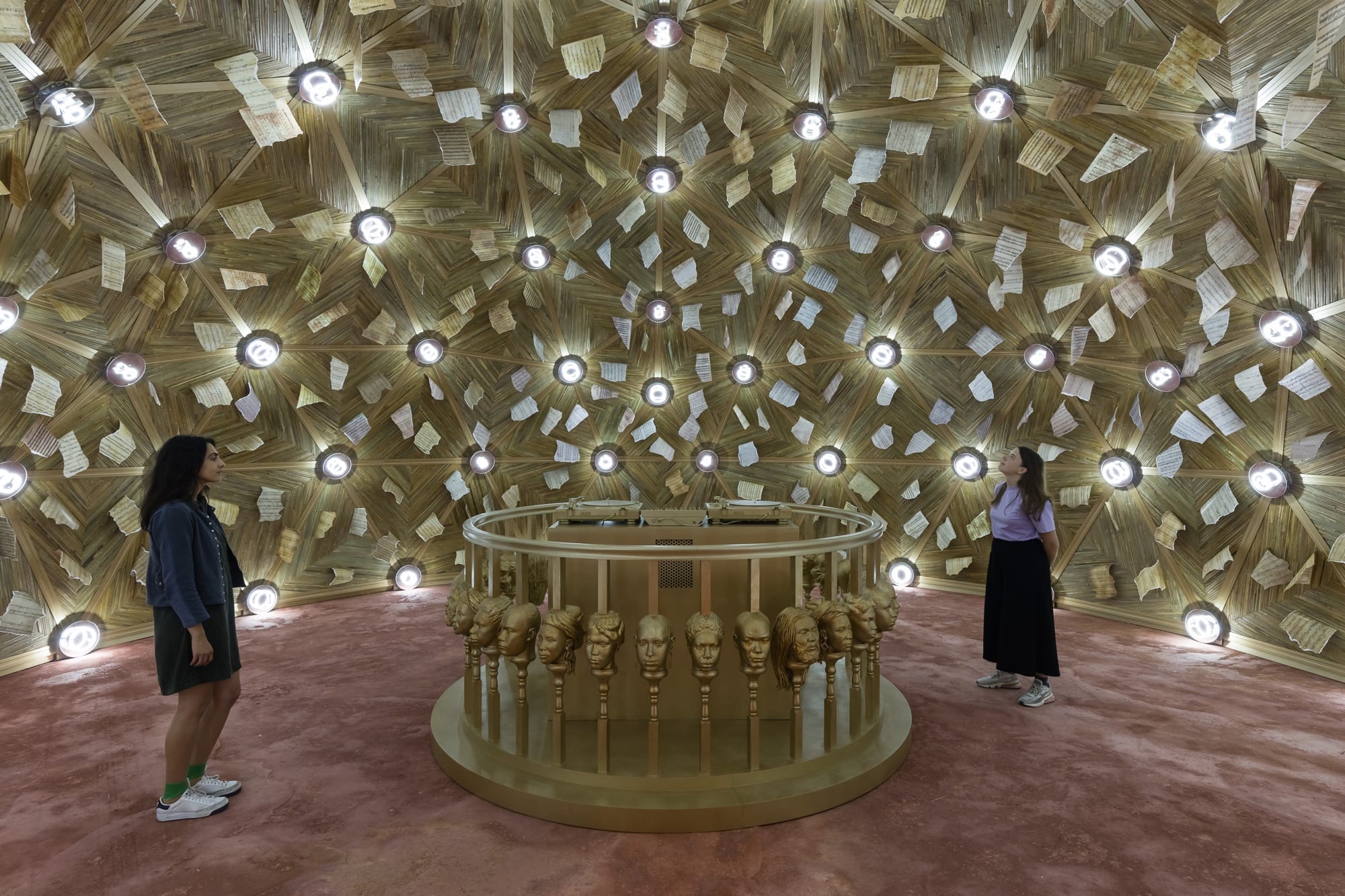
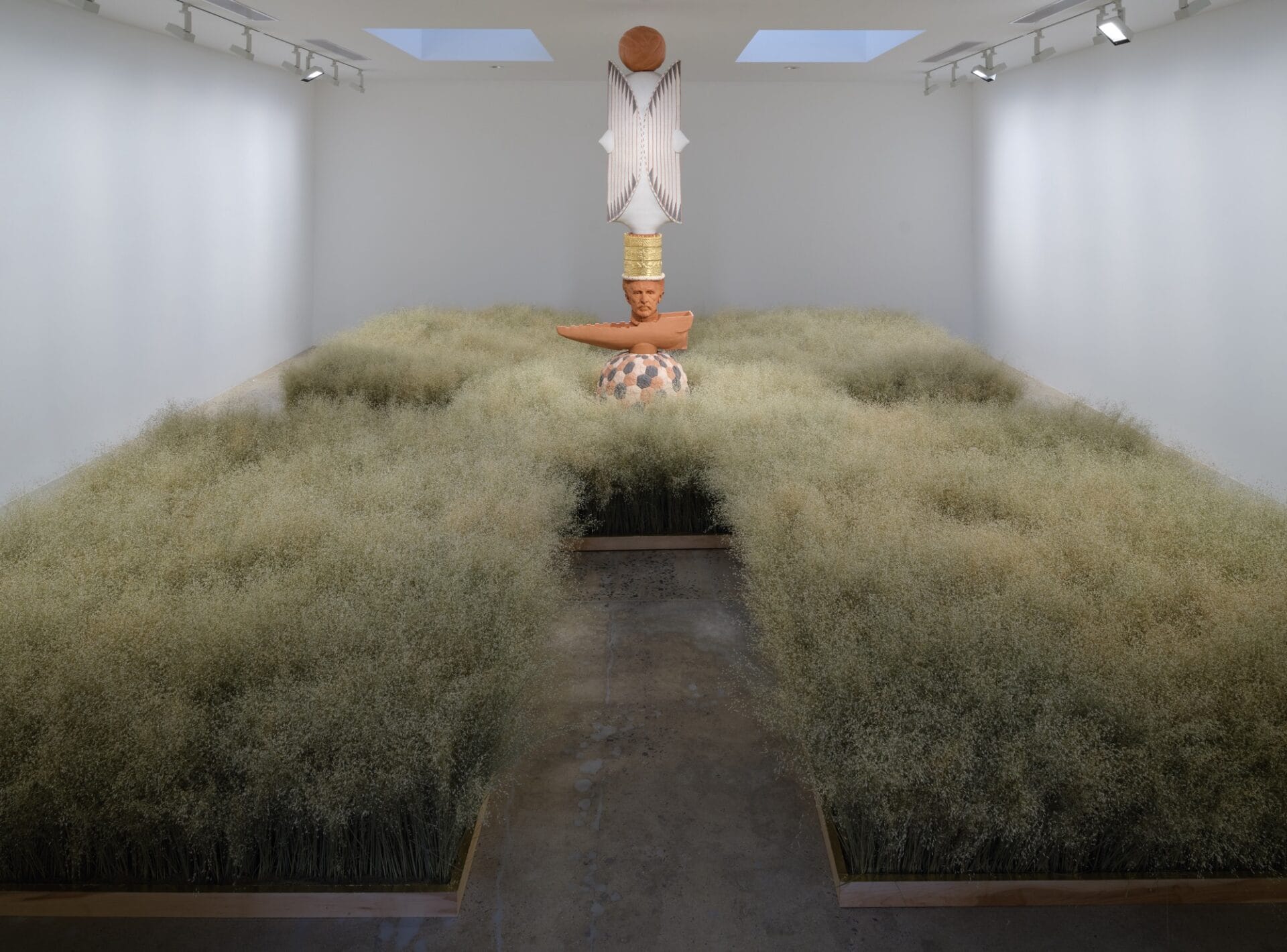
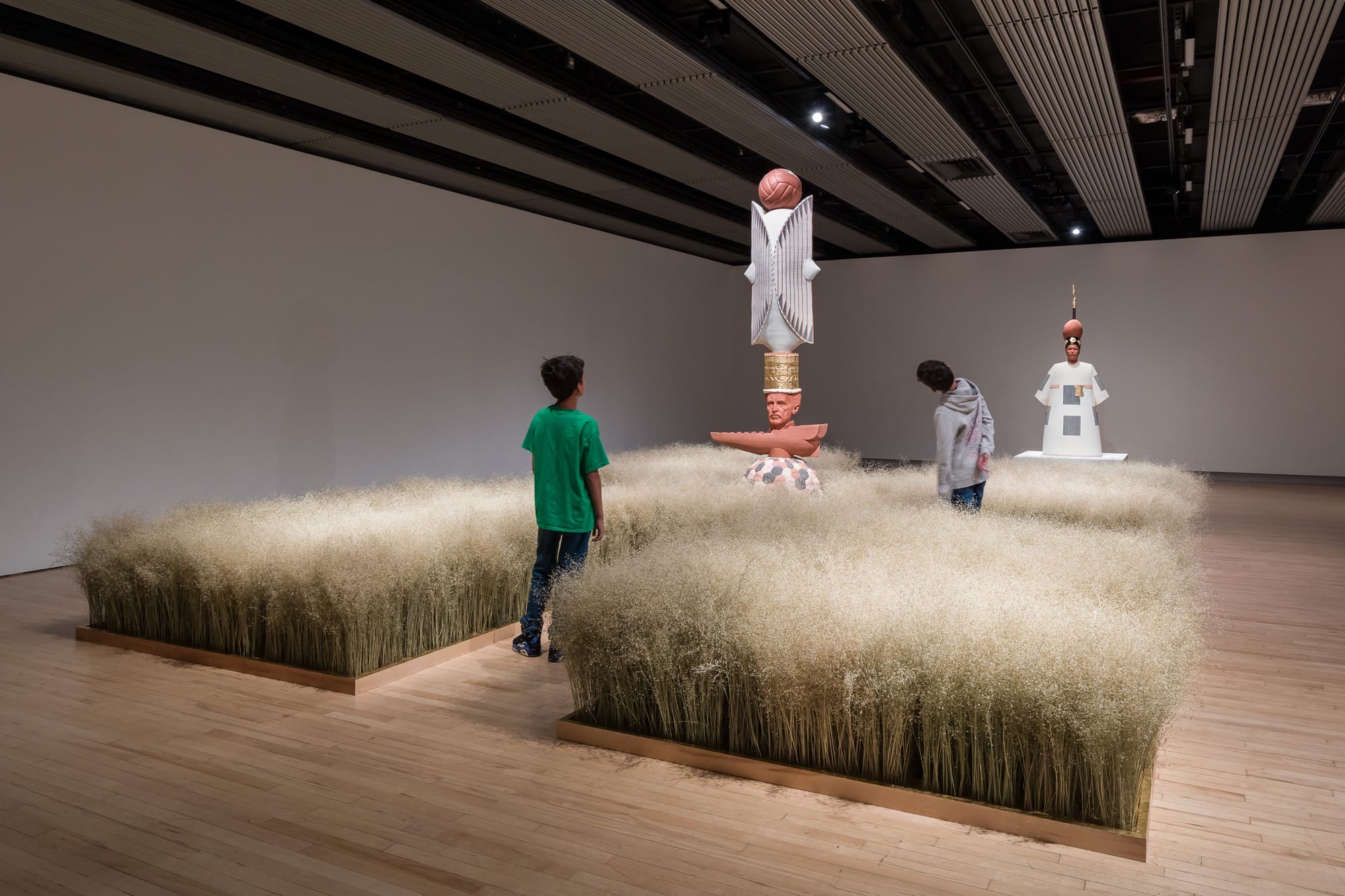
Scale and space also play an integral role in Strachan’s installations, which invite the viewer to wander in and around a range of monuments, structures, and pathways. In “Intergalactic Palace,” for example, the interior of a straw hut transforms into a resplendent, shrine-like dome of light centered around an elaborate DJ booth, and “Jah Rastafari with Rice Field (Stacked with Pineapple, Shield and Football)” recreates an agricultural setting that accentuates two totem-like figures.
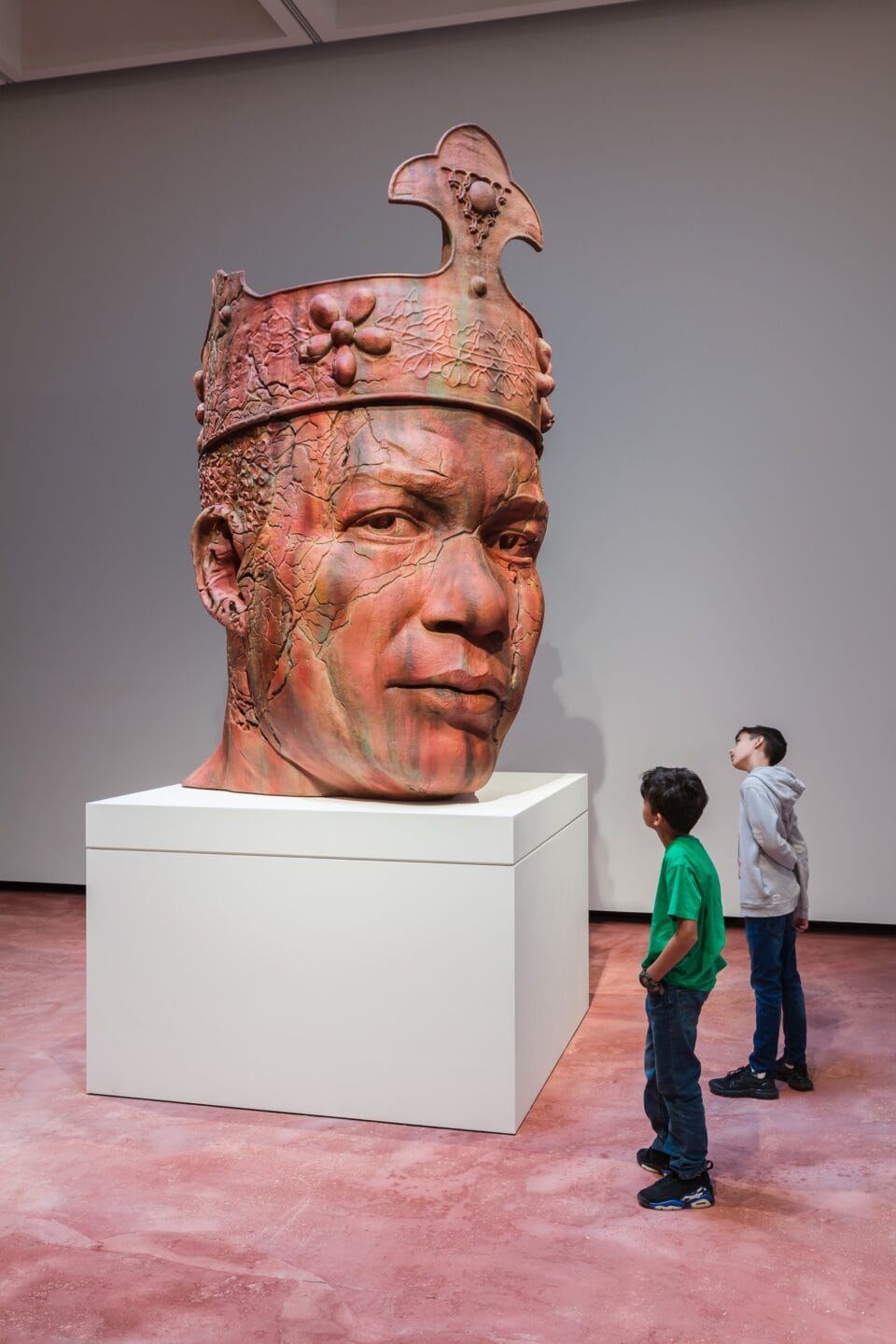
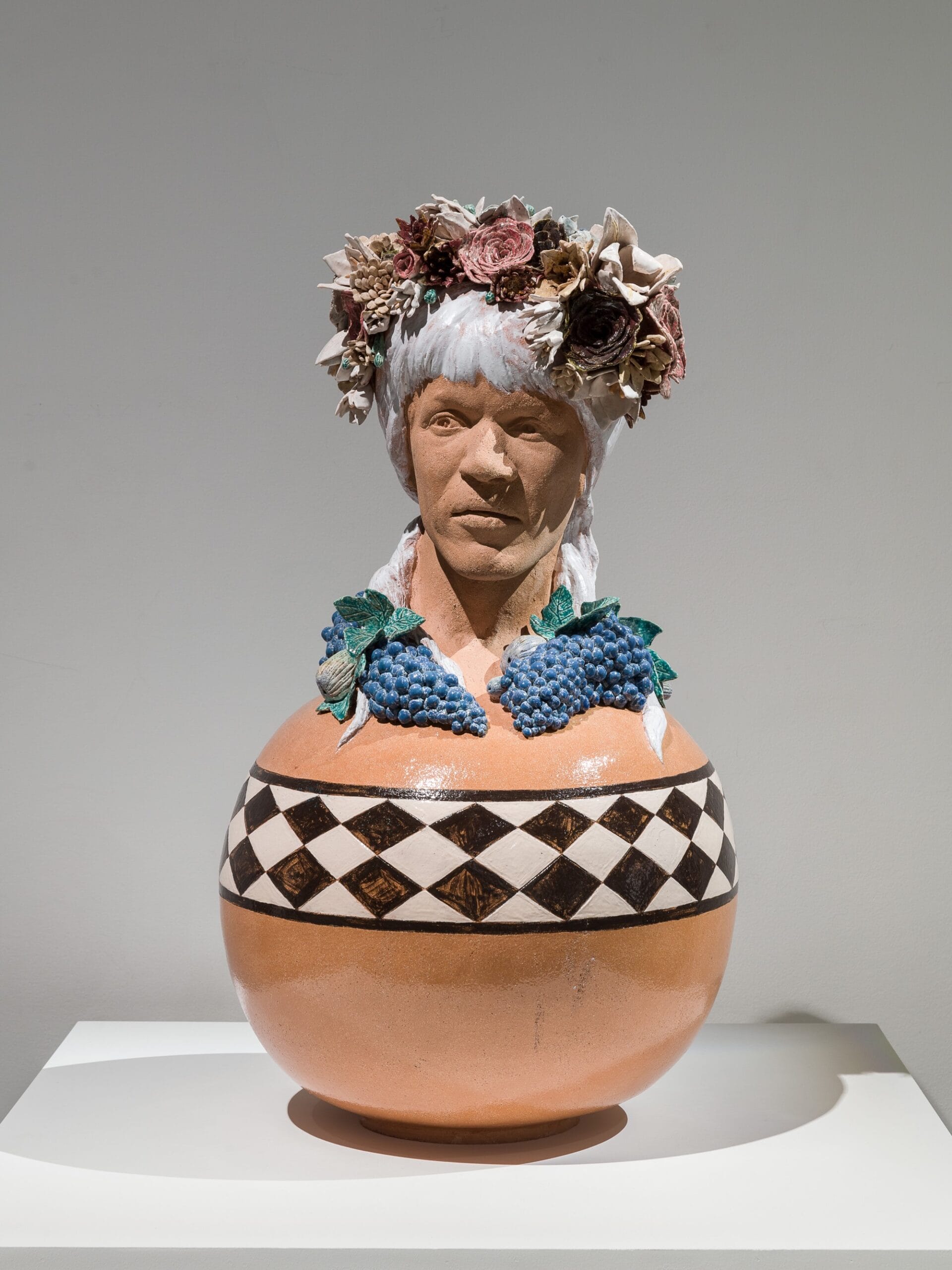
Many of the visages incorporated into the artist’s work portray real people or deities, like sound pioneer King Tubby, who influenced the development of dub, an electronic music style that emerged from reggae in the 1960s and 1970s. And in “Game and Board (Marsha P. Johnson), the prominent gay rights activist dons a floral crown and a collar of grapes. Strachan emphasizes a connection to ancestry and the sacred, which Hayward director Ralph Rugoff describes as a “way of remapping” community and global connections of the African diaspora.
There Is Light Somewhere continues through September 1. Find more on the gallery’s website, and follow the artist’s updates on Instagram.