In ‘Interventions,’ Ann Carrington’s Elaborate Metal Sculptures Plumb the Past
One of the most enduring symbols of wealth and status is the country house, especially in England, where the tradition began to flourish during the 15th and 16th centuries. Thanks to increased stability during the Tudor era, stately homes no longer needed to be intensely fortified, giving birth to architectural expression on a grand scale.
Characterized by imposing facades and sprawling grounds, lavish country houses are popular all over the world. In the U.S., the Industrial Revolution spurred new wealth, and the American Country Place Era (1890-1930) saw the construction of numerous homes away from major urban centers. Cheekwood Estate, on the outskirts of Nashville, Tennessee, is an example built toward the end of that period, providing a standout setting for Ann Carrington’s ambitious solo exhibition as part of the estate’s ongoing series, Interventions.
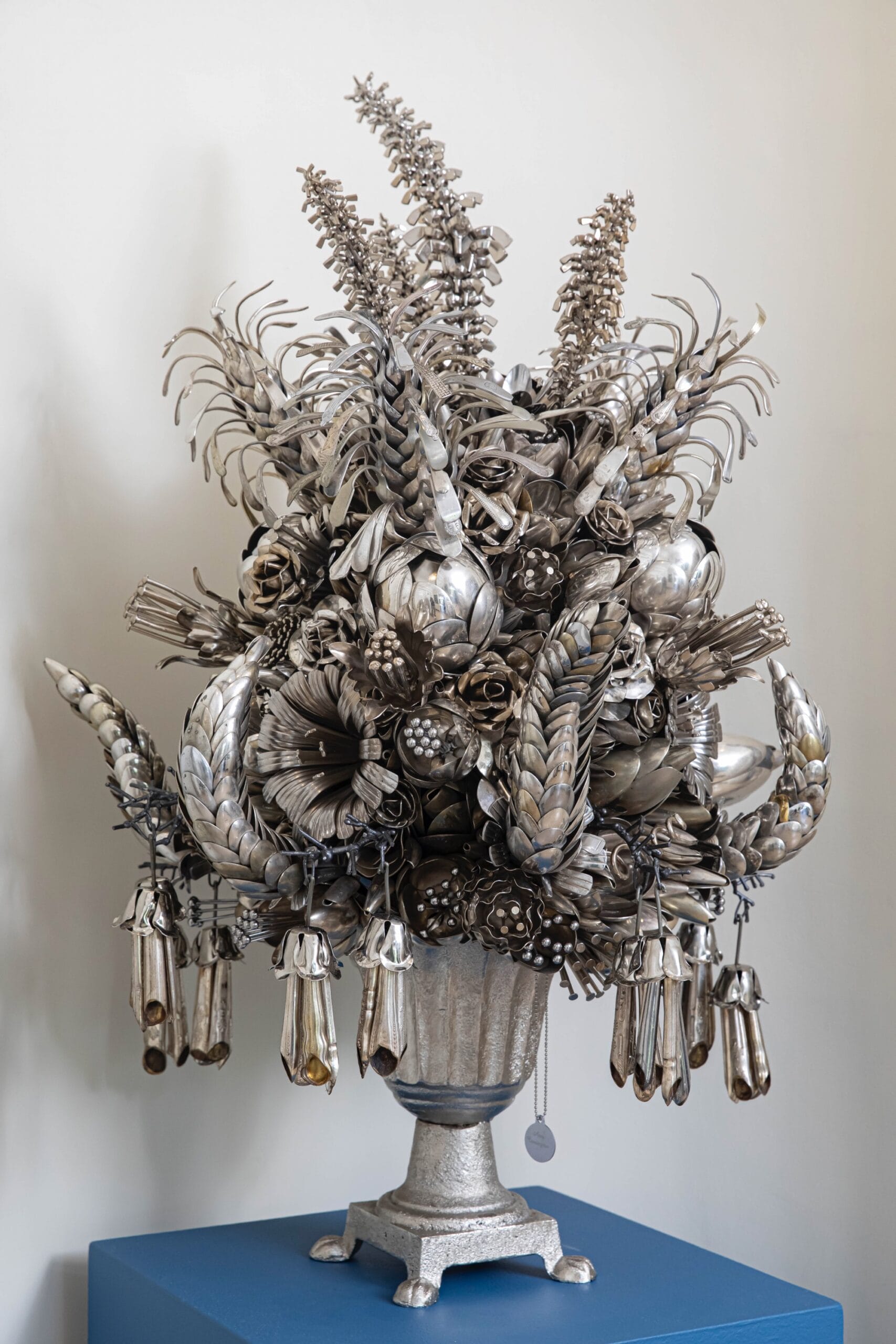
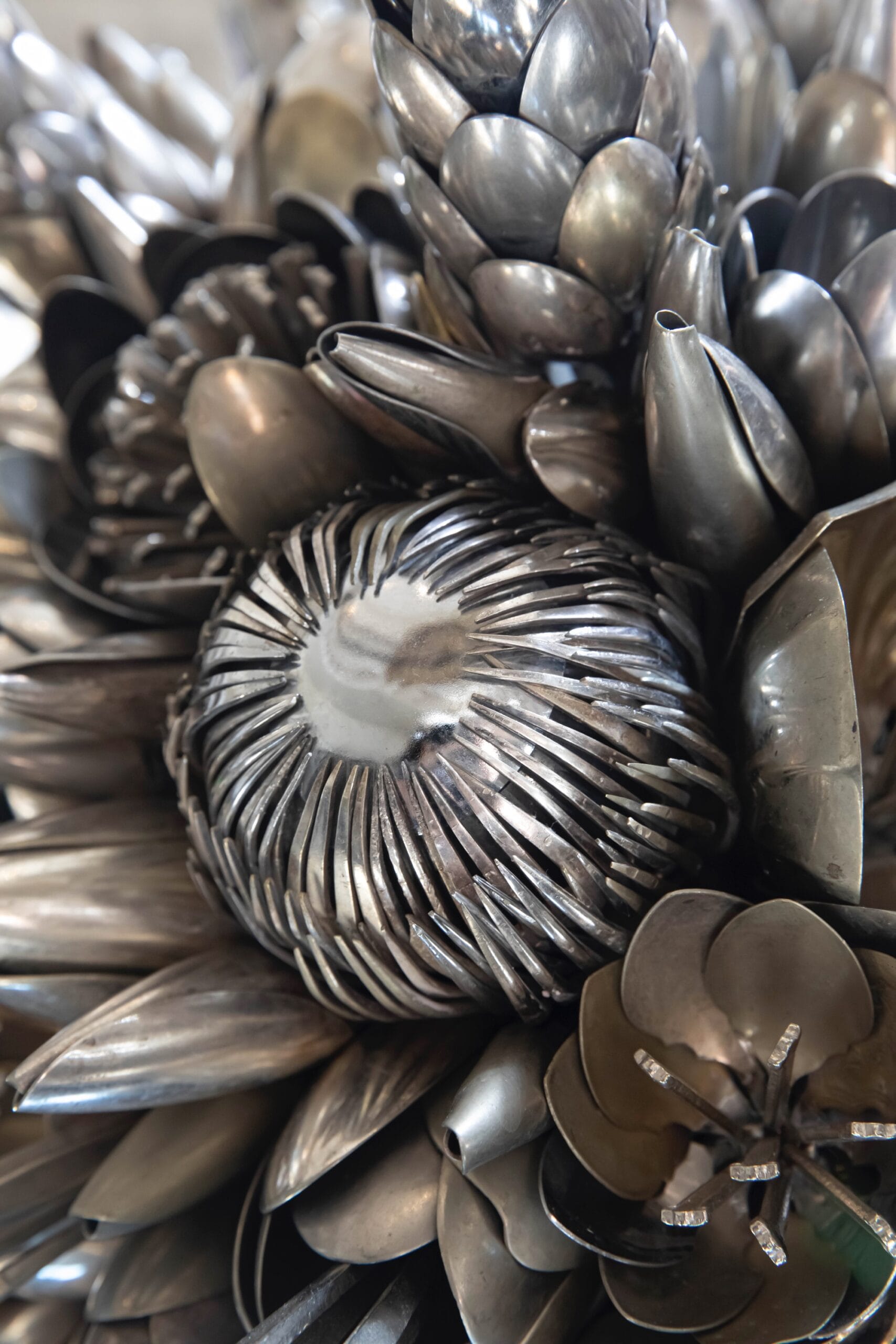
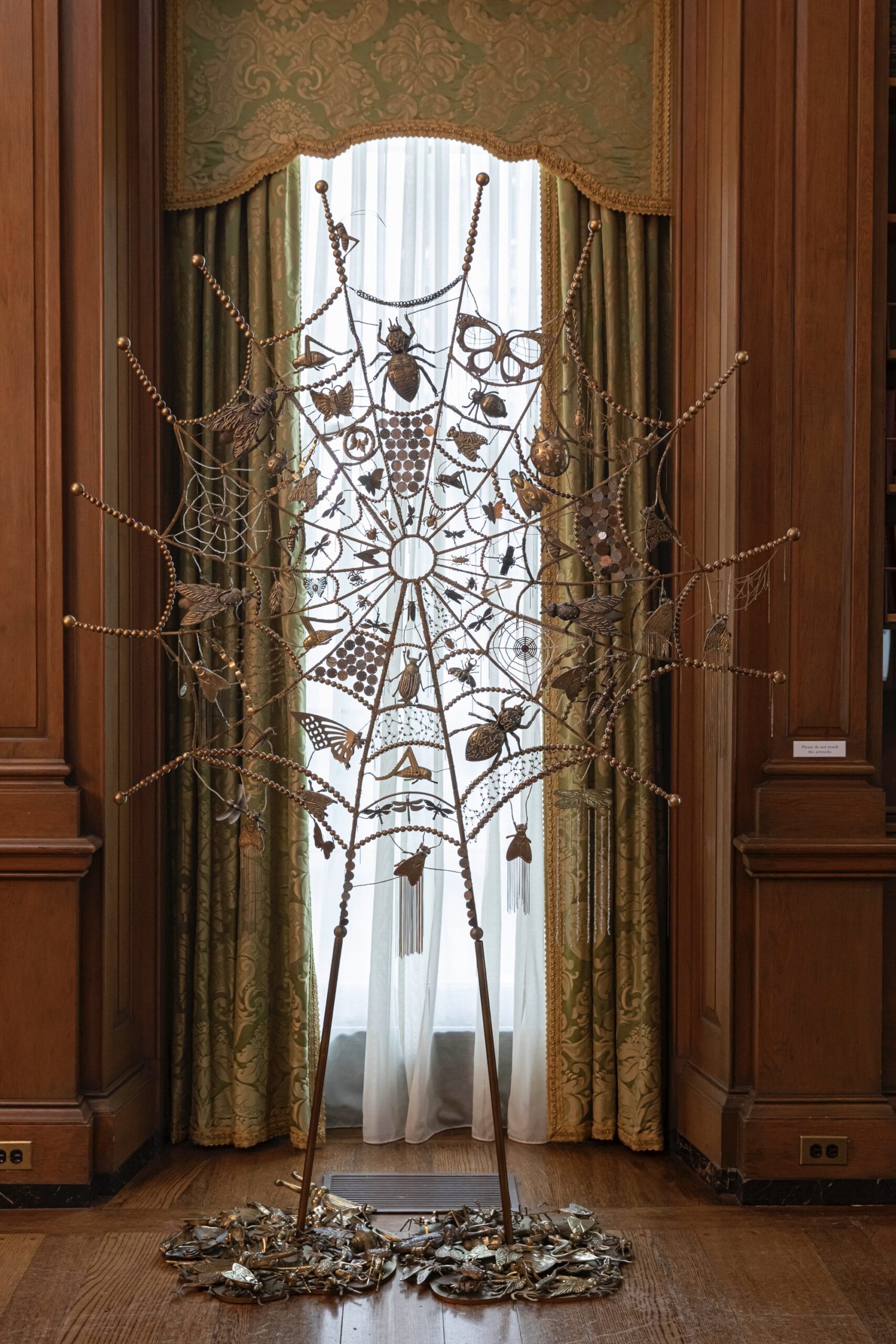
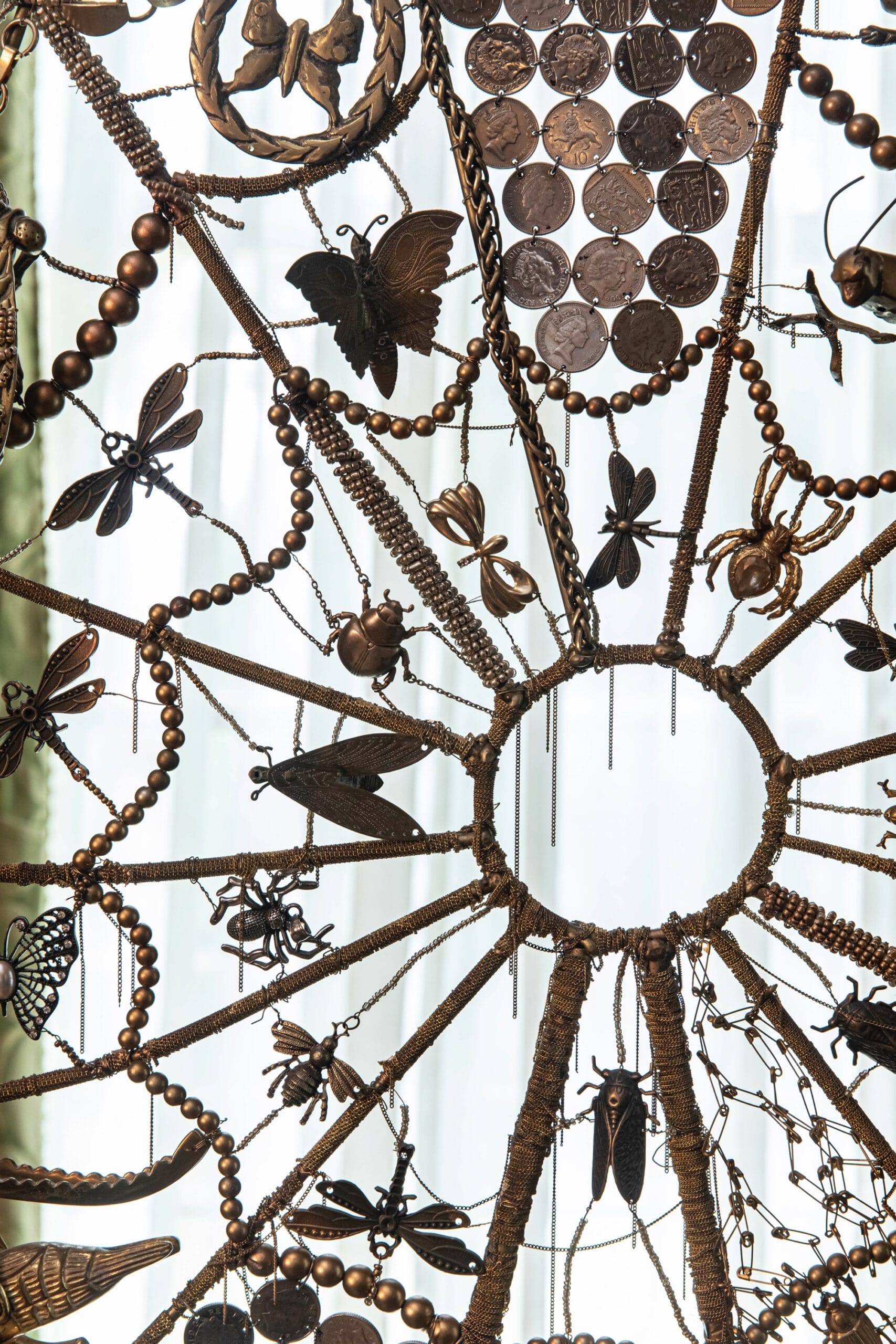
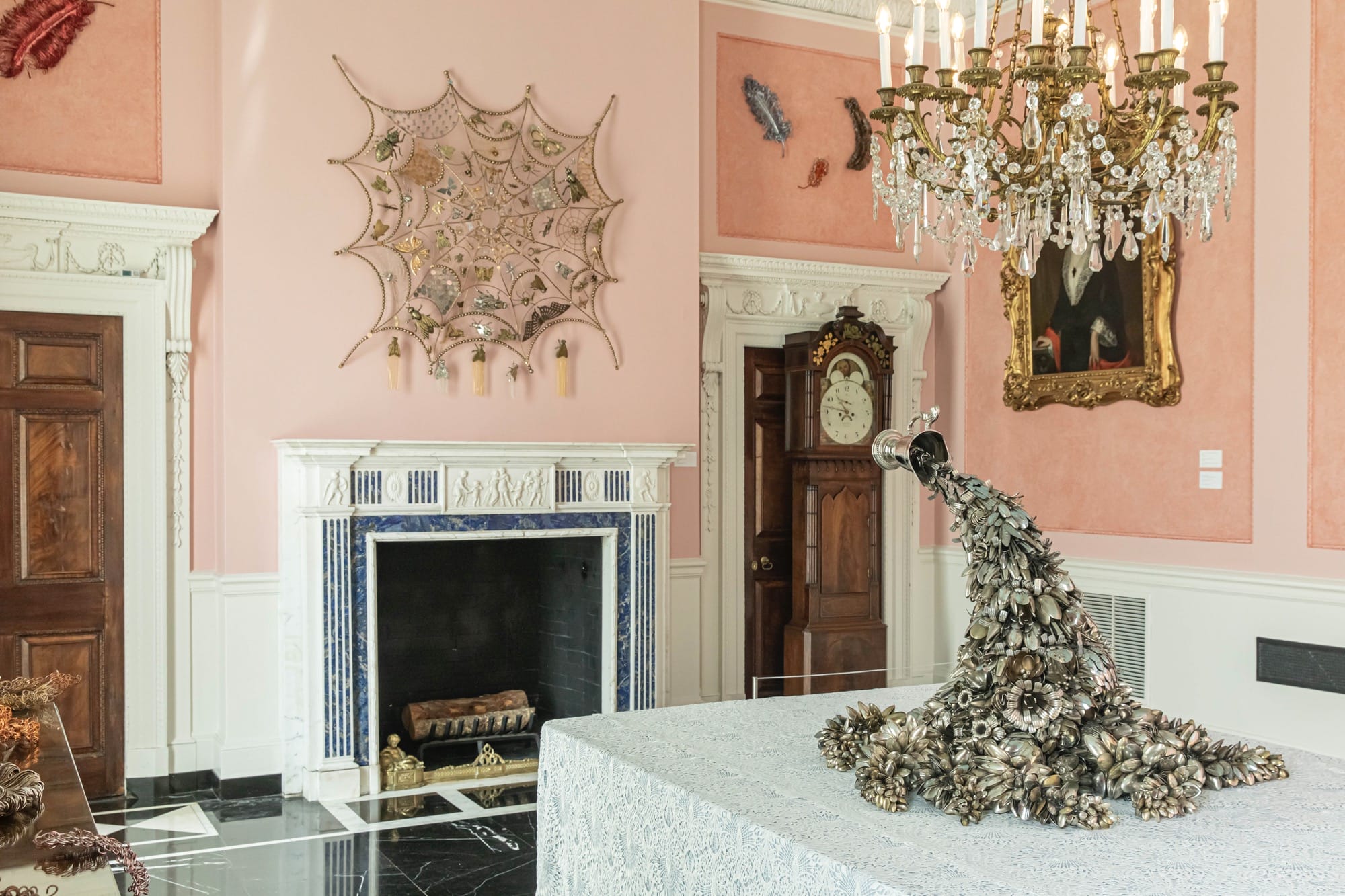
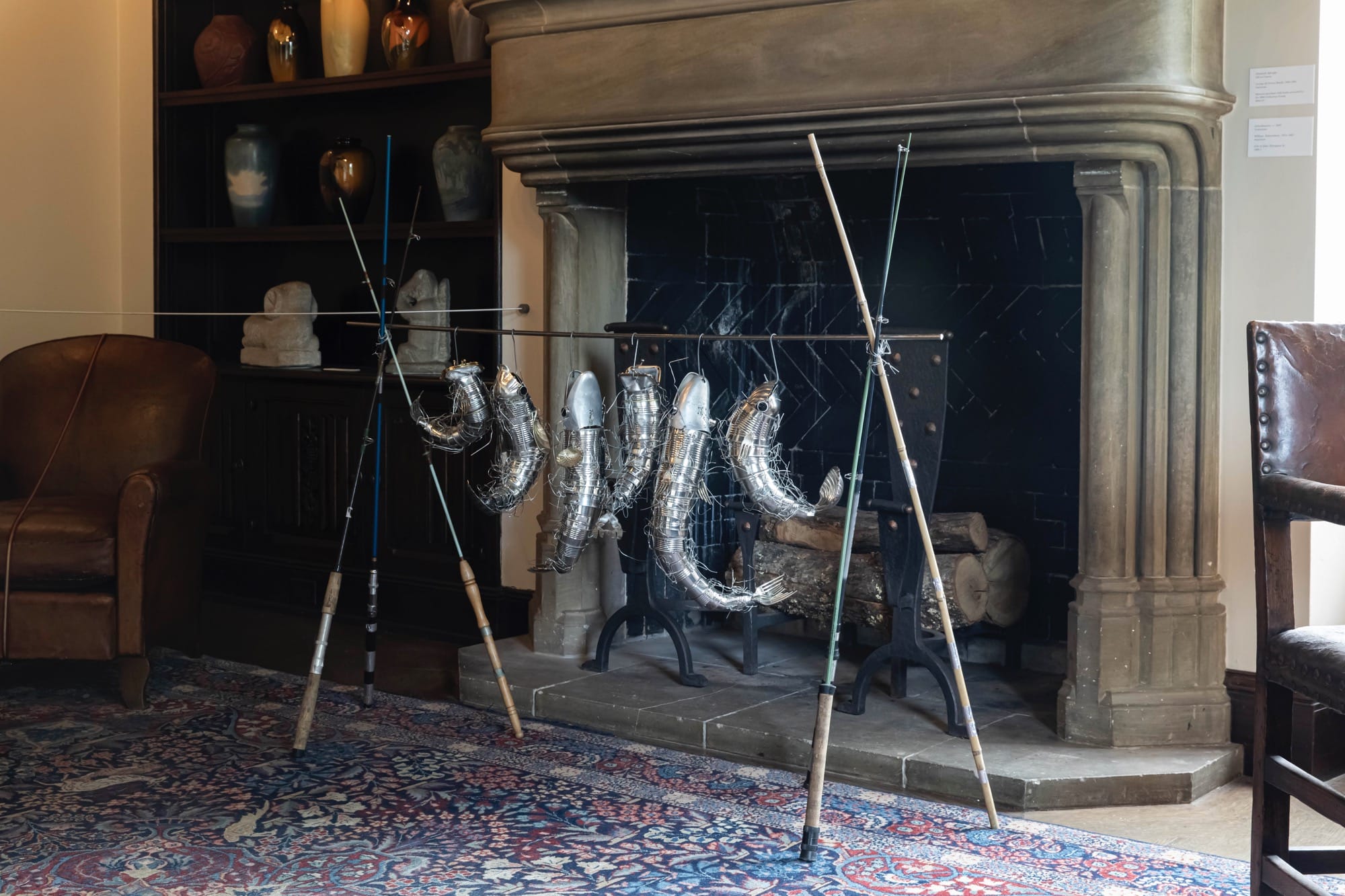
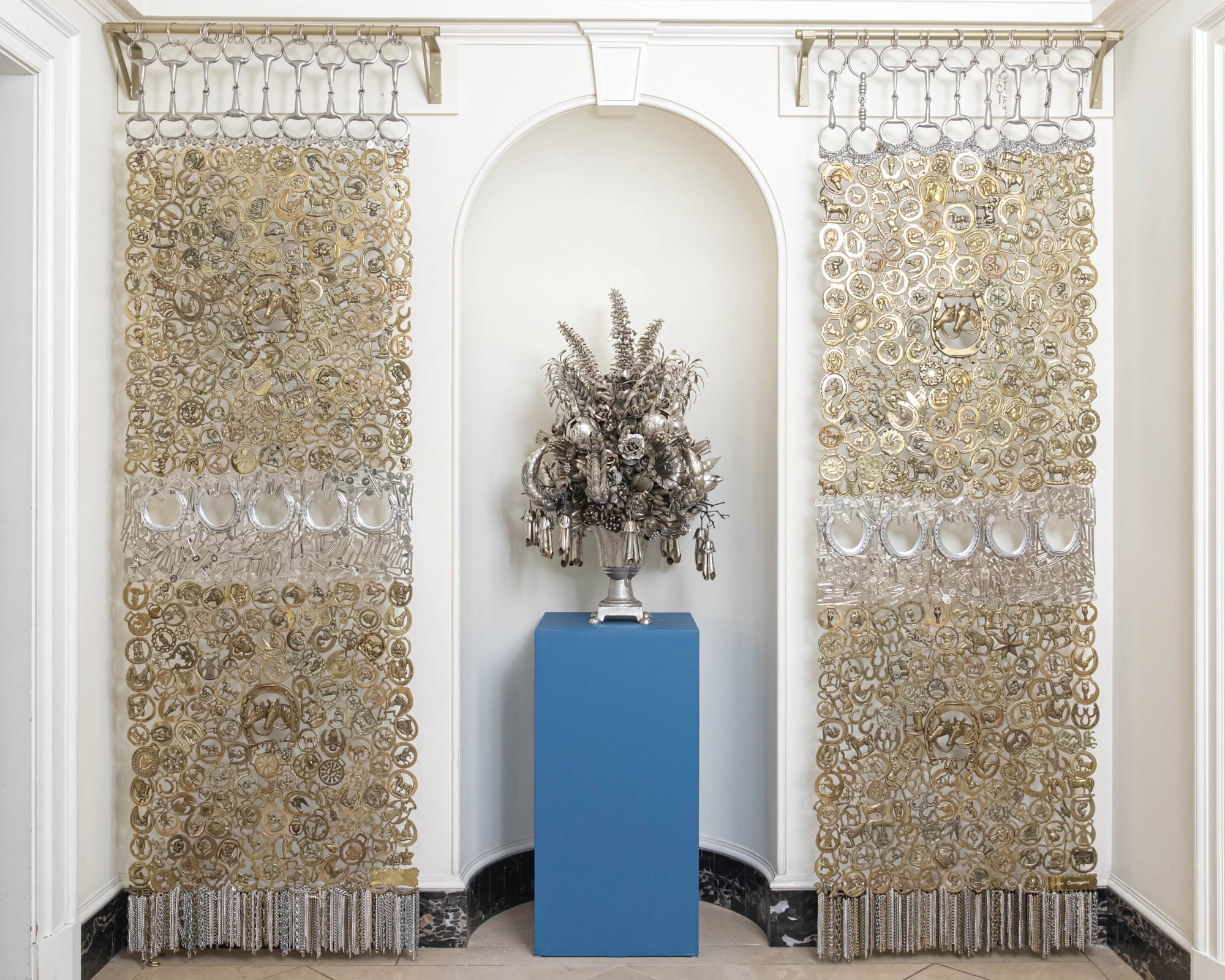
Curling spoon handles into fanning seed heads, fork tines into thin petals, or hairpins into pistils and stamens, Carrington (previously) creates opulent compositions from vintage metals. Drawing on the legacy of vanitas paintings, in which lush bouquets and platters of food often hide an underlying symbolism of decay, the artist considers how everyday items like cooking and eating utensils remain long after the food or floral arrangements have disappeared.
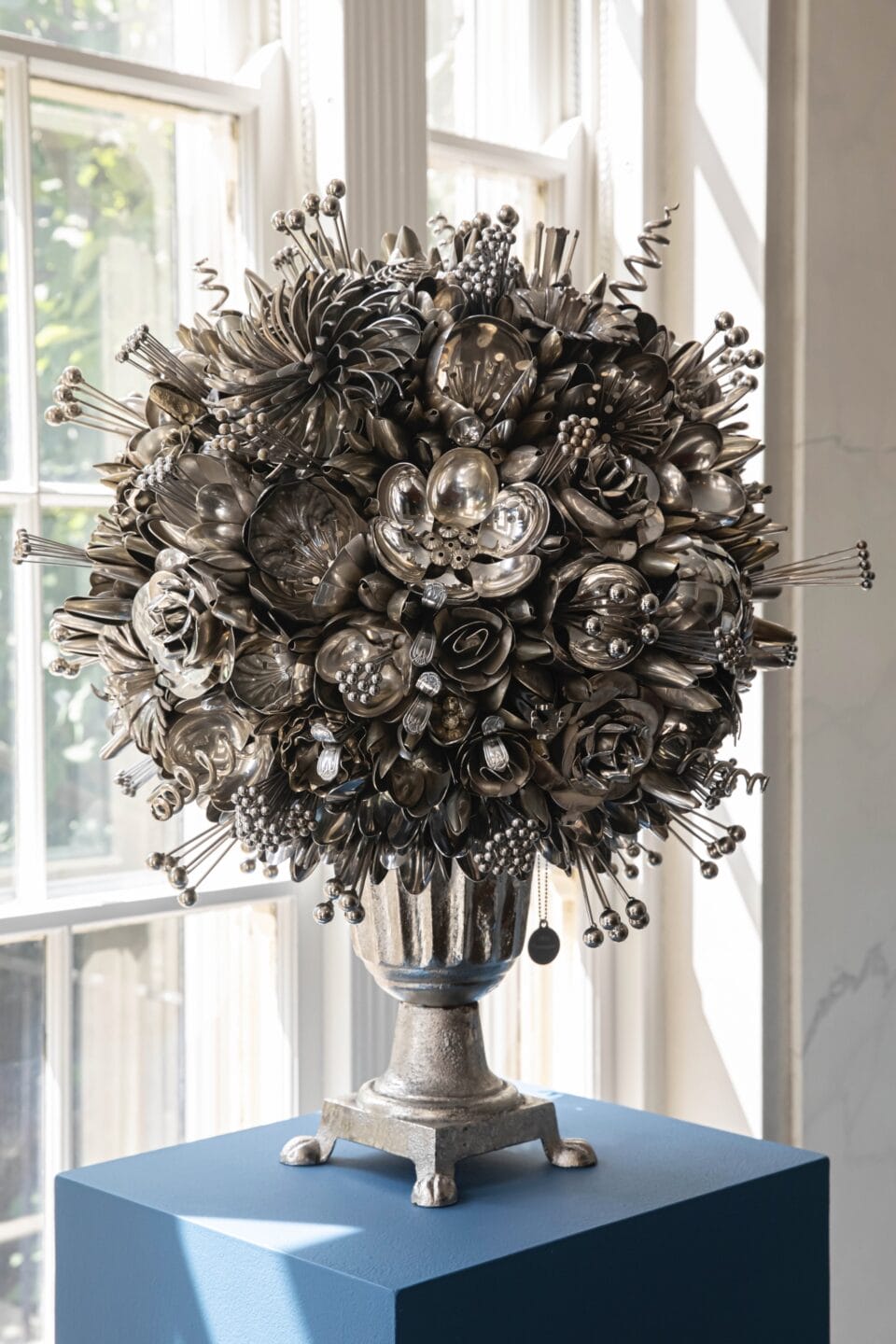
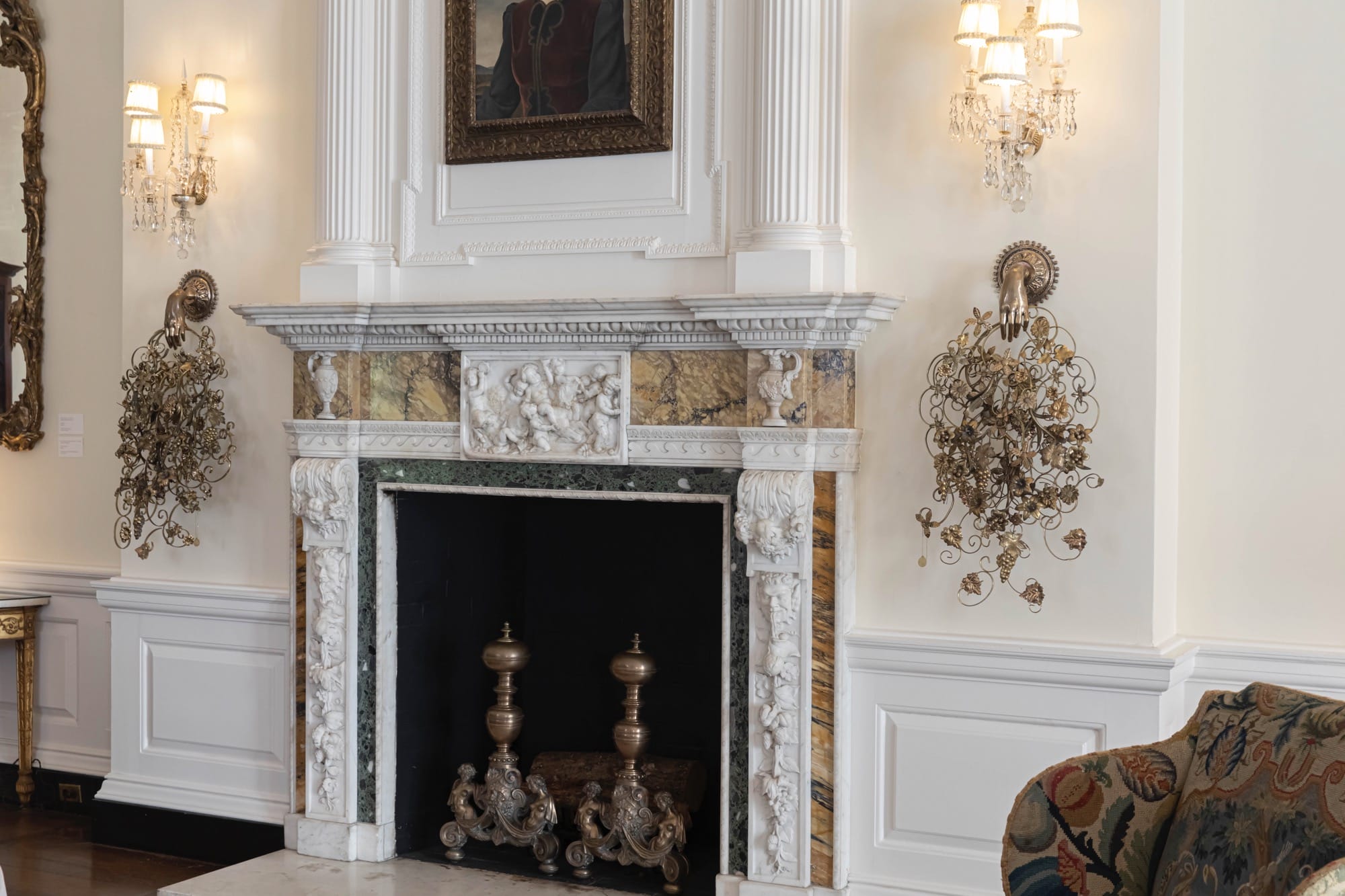
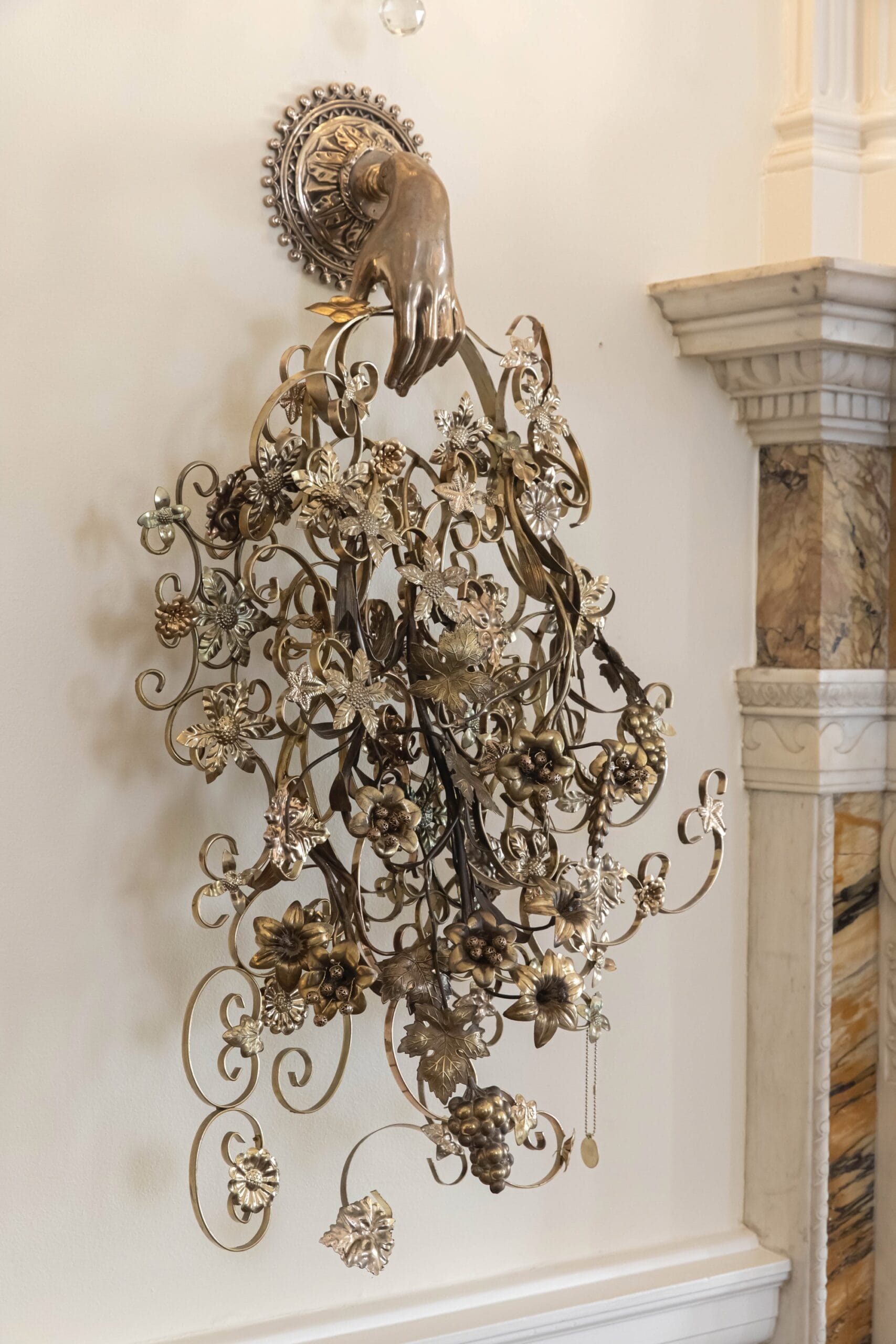
From Cheekwood’s kitchen to the conservatory and numerous rooms in between, Carrington has installed 33 elaborate floral displays, delicate screens, and thriving spiderwebs made of metal. Complementing the estate’s collection of fine and decorative arts, Carrington’s pieces beckon visitors through formal entryways and period rooms. A pair of brass hands holding delicate tendrils flanks a large fireplace, while numerous bouquets crown tabletops and plinths throughout the home.
Interventions—Ann Carrington continues through October 27, and you can explore more of the artist’s work on her website and Instagram.